It was a pleasure meeting and being inspired by Fiz Rivero, representing the Galicia Sustainable Tourism Network at ITB in Berlin in March 2025.
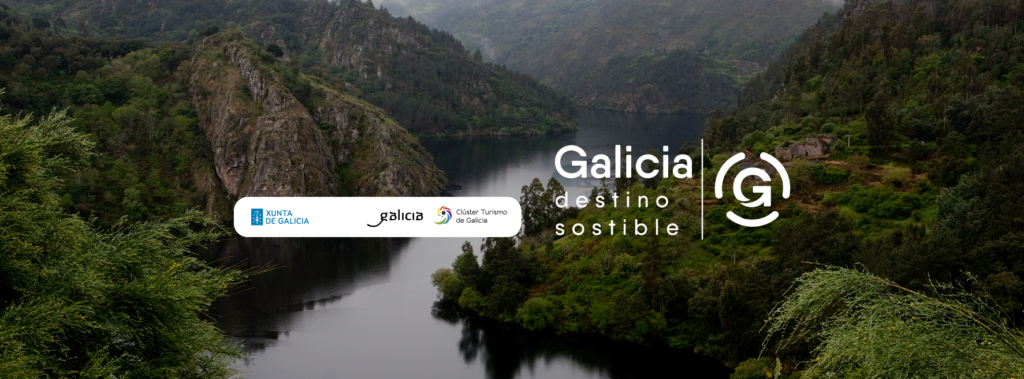
Galicia (Galizia), the north-west autonomous community of Spain, has developed an active network and ecosystem to promote sustainable tourism, centring on an initiative called “Galicia Sustainable Destination” (Galicia Destino Sostible).
Galicia Sustainable Destination is a product club and tourism network launched in 2022 by the Galician Tourism Cluster with support and funding from the Xunta de Galicia (Galician regional government). It aims to:
- Connect travellers with sustainable tourism providers in Galicia.
- Highlight offers and experiences that meet quality and sustainability criteria.
Promote environmentally, socially and economically responsible tourism aligned with the UN Sustainable Development Goals (SDGs).Lorem ipsum dolor sit amet, consectetur adipiscing elit. Ut elit tellus, luctus nec ullamcorper mattis, pulvinar dapibus leo.
How the Network Works
- The network is structured as a club or product platform that brings together tourism businesses and experiences committed to sustainability.
- Members include accommodations, restaurants, tour operators, activity providers and travel agencies that meet sustainability requirements. clusterturismogalicia.com
- To join, companies must meet official environmental or sustainability certifications (e.g., EMAS, ISO 14000, MICHELIN Green Star, memberships in related sustainable tourism clusters), or fulfill mandatory quality and sustainability standards. galiciadestinosostible.com
- Membership is currently free, with access to technical support, marketing visibility and potential public funding.
As of late 2025, the club includes over 135 companies and around 150+ sustainable tourism offers across Galicia, covering a broad range of activities and experiences. clusterturismogalicia.com
The network serves as a meeting point for tourists and sustainable providers, helping visitors find responsible experiences while supporting local economies and cultural heritage.
🌎 Broader Regional Sustainability Initiatives
While Galicia Sustainable Destination is the core network focusing specifically on linking sustainable operators within Galicia, there are related broader projects that integrate sustainable tourism at a supra-regional level, such as the Green Spain Ecotourism Reserve, which connects protected natural areas (including those in Galicia) across northern Spain to foster ecotourism
🧬 Requirements to join the Club
To join Galicia Destino Sostible, organisations must meet the following conditions:
- Be a registered tourism business
The organisation must be officially registered in the Register of Tourism Enterprises and Activities of the Xunta de Galicia.
- Meet sustainability criteria through two main pathways:
1) Enabling (qualifying) requirements
Possession of recognised sustainability certifications, either environmental or sector-specific.
These include, for example:
- ISO 14001 / EMAS (environmental management systems)
- Biosphere Sustainable (GSTC-aligned)
- Green Key / EU Ecolabel
- Green Star – MICHELIN Guide
- Fair’n Green.
- Membership in recognised clubs or associations such as Ecotourism Product Club of Spain or Slow Tourism Norte de Galicia.
- 2) “Mandatory and value-enhancing” requirements
Companies that do not hold formal certifications may still join if they:
Comply with all mandatory requirements (e.g. energy consumption management, waste reduction, local employment), and
Meet at least 33% of the assessable criteria, declared through a self-assessment (declaration of responsibility).
👉 Monitoring and audits
The Tourism Cluster of Galicia may carry out biennial audits to verify that members continue to comply with and progressively improve their sustainability performance.
Member companies and activitities
The official website does not always publish a detailed list of individual certifications; however, it is possible to identify several members recently announced in official communications from the Galicia Tourism Cluster.
Selected examples include:
- Torre de Tebra – a tourism activity focused on natural settings (e.g. excursions and outdoor experiences).
- Faro Pequeno and Faro de Cabo Silleiro – historic lighthouses converted into sustainable tourism attractions.
- Salmoira – a gastronomic experience and/or local producer, linked to the valorisation of local food culture.
- Pazo Quinteiro da Cruz – a historic property offering hospitality closely connected to local heritage and landscape.
- Amar Carril, Vio Viajes, Experiencias del Destino, Hotel El Puente – recently added members (Nov–Dec 2025), illustrating the diversity of the network, from travel agencies to sustainable hotels.
⚠️ Note
The platform features more than 130–155 companies, categorised by type (accommodation, restaurants, travel agencies, activities).
👉 The website galiciadestinosostible.com (List of Companies) in the ‘join the club’ section https://galiciadestinosostible.com/en/join-the-club/ shows the enabling requirements for the activities directly entitle to be a member because of their recognised and certified approach, and the Mandatory and valuable requirements for the activities that need to be verified.
Impact on the region of Galicia (Why it matters)
1) Destination-level impact (strategic)
- Moves sustainability from rhetoric to governance:
Galicia Destino Sostible creates a shared regional framework, reducing fragmentation among individual initiatives. - Strengthens Galicia’s positioning as a responsible destination:
Not just “green products”, but a structured destination narrative aligned with EU, GSTC and ESG expectations. - Improves policy alignment between public authorities, tourism businesses and the Cluster, making sustainability measurable and monitorable.
2) Economic and business impact
- Raises the competitiveness of SMEs
Small and medium tourism businesses gain:- Market visibility
- Structured sustainability pathways
- Easier access to certification readiness and quality standards
- Market visibility
- Diversifies tourism products
Encourages growth beyond mass tourism, supporting:- Nature-based tourism
- Cultural and experiential tourism
- Gastronomy and local production
- Nature-based tourism
- Improves resilience
Businesses adopting sustainability criteria tend to be more resilient to:- Regulatory changes
- Energy price volatility
- Climate-related risks
- Regulatory changes
3) Social and territorial impact
- Supports rural and peripheral areas
By integrating rural lodgings, experiences and producers, the initiative:- Helps counter depopulation
- Creates local employment
- Keeps tourism value within communities
- Helps counter depopulation
- Encourages local supply chains
Prioritising local staff and suppliers strengthens the regional circular economy. - Enhances community acceptance of tourism, reducing conflict linked to overtourism.
4) Environmental impact
- Reduces environmental footprint at scale
Even without universal certification, mandatory criteria ensure:- Better energy and resource management
- Waste reduction practices
- Increased environmental awareness across the sector
- Better energy and resource management
- Promotes adaptive reuse
Projects such as lighthouses and historic buildings demonstrate low-impact regeneration, avoiding new construction. - Creates a culture of continuous improvement, reinforced through audits and monitoring.
Overall assessment (in one sentence)
Galicia Destino Sostible functions as a regional transition tool, enabling Galicia to evolve from isolated sustainable practices to a coordinated, measurable and market-credible sustainable destination model, particularly suited to SME-based and rural territories.
Interesting numbers!!
Approximately ~2.7 million residents live in Galicia
According to recent labour market data, there were around 1.25 million people active in the labour market in Galicia in 2023 https://eures.europa.eu/living-and-working/labour-market-information/labour-market-information-spain_en#galicia
Tourism employment in Galicia recently exceeded ~128,000–130,000 workers (pre-pandemic recovery and growth).
🎯 Who benefits from Galicia Destino Sostible
Direct beneficiaries
Primarily, the tourism workforce and businesses:
- Tourism workers (e.g., in hospitality, guides, agencies, excursions)
- Owners and employees of sustainable tourism businesses
- Local producers integrated into tourism experiences
Since Galicia Destino Sostible focuses on tourism sustainability, it covers only the subset of the labour force employed in tourism or tourism-related activities.
Indirect beneficiaries
Broader economic and social groups that benefit indirectly:
- Local suppliers and micro-producers that serve tourism businesses
- Hospitality and service staff in SMEs upgrading sustainability practices
- Communities in rural or peripheral areas, where sustainable tourism helps diversify income
- Younger workers entering an evolving job market with sustainability skills
- Regional branding and marketing, which may increase demand for local jobs
Beyond direct tourism employees, tens of thousands more benefit indirectly — people in construction, transport, food production, craftsmanship, and cultural services linked to sustainable tourism.

Source
- Cluster Turismo Galicia clusterturismogalicia.com
- Galicia destino sostenibile website https://galiciadestinosostible.com/en/join-the-club/
- Labour market https://eures.europa.eu/living-and-working/labour-market-information/labour-market-information-spain_en#galicia
- tourism and hospitality workers https://clusterturismogalicia.com/en/los-trabajadores-ocupados-del-sector-turistico-gallego-aumentan-un-161-en-el-cuarto-trimestre-del-2023/